What Is a Flyknit Sports Knee Brace? How Knit Support Works
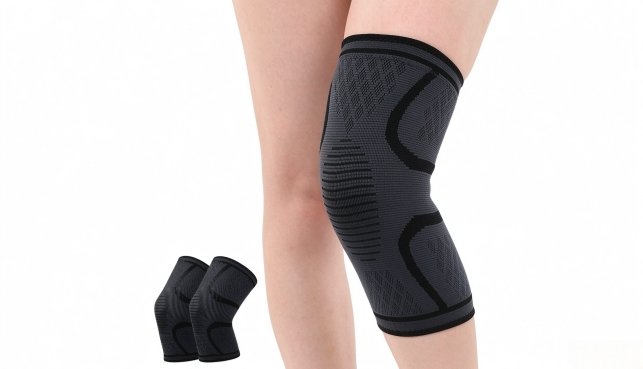
A Flyknit sports knee brace is a knee support whose main body is knitted as a single engineered piece rather than cut from neoprene sheets and stitched together. The knitting machine varies stitch density across the brace, so one sleeve can apply firmer compression over the patella, stay flexible behind the knee, and vent heat where the joint bends.
How the construction delivers support
Three design choices do the work. Stitch density creates graded compression — tighter zones press and support, looser zones let the knee flex without pinching. Yarn blend sets the feel; moisture-wicking polyester or nylon keeps skin dry, while a small percentage of spandex lets the knit recover its shape instead of stretching out. Zone shaping follows the anatomy of the knee, with a denser band above and below the patella and an open knit behind the joint.
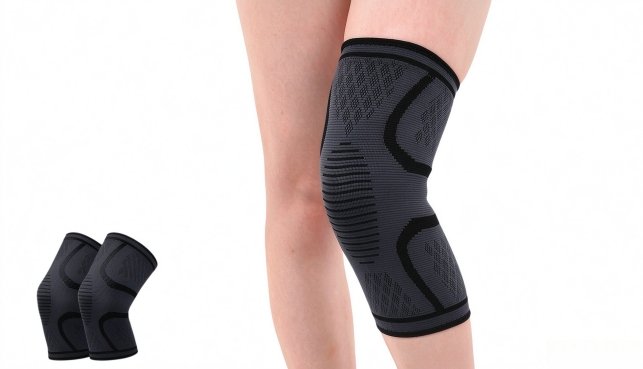
Zone-programmed knit: firm above the patella, open behind it.
The result behaves differently from a rigid brace. Instead of locking the joint, a Flyknit sports knee brace supports it through fit and graduated pressure, which suits sports where you still need to move naturally.
Flyknit versus neoprene and hinged braces
Neoprene sleeves are cheaper to produce and offer warmth, but they trap sweat and slip during activity. Hinged braces provide the most mechanical stability for serious ligament injuries, but they are heavy and rarely comfortable for casual use.
The knitted approach sits between the two. It holds position through knit tension rather than straps, ventilates far better than neoprene, and weighs a fraction of a hinged brace — the everyday choice for runners, gym users, and active older adults.
How to choose the right size
Size matters more than any feature. Measure the knee circumference at mid-patella with the leg straight, then check the manufacturer’s size chart — knitted braces are sized in narrow
We are committed to sustainability and use GRS-certified recycled yarns across our production lines.